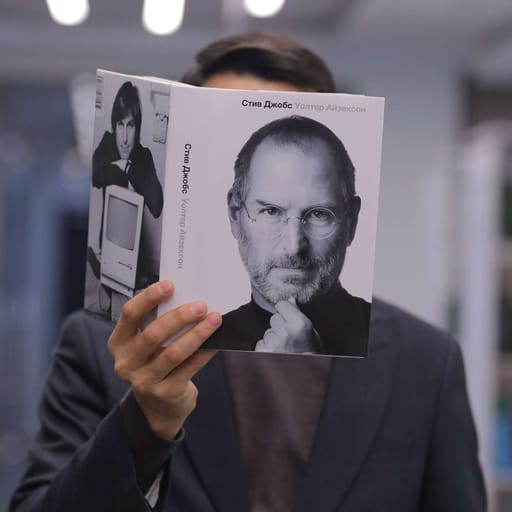
Transcript 0:00 [upbeat music] Hey, everybody. Welcome to Wit and Wisdom, where we bring you the latest insights on American culture and current events. I'm Tom Green, and I'll be your guide. 0:19 So we've all been hearing a lot lately about virtual currencies with the failure of cryptocurrency exchange FTX. FTX was exchange that allowed customers to trade Bitcoin and Ethereum and other virtual currency products. 0:33 But overnight, billions of dollars of customer money vanished in what many are claiming is the death of virtual currencies. They may be right, 0:43 but what if this failure is simply a realignment or revaluation of things we value? In fact, what if time is the new virtual currency? Let me explain. 0:56 Let's think back to the beginning of the pandemic back in twenty twenty. Things in this country were generally okay for most people. The economy was hot, unemployment was low, and the stock market was on fire. 1:10 Everybody was bulletproof. Then the pandemic hit, and everything changed. The pandemic created an opportunity to pause, to take a fresh look at how we use, invest, and even waste our time. 1:27 See, for as long as most of us can remember, the most important thing in this country was to be rich, or at least on your way to being rich. 1:36 It's the American dream, and it's not for the money, but for the autonomy and the flexibility that being rich brings. 1:44 But if you stop and think about it, in our zeal to be rich, we're overworked, overstressed, overextended, and probably overmedicated. 1:54 Otherwise, how do you reconcile that almost twenty-five million adults have been taking antidepressants for at least two years? Or how about the fact that thirty-seven million Americans have type two diabetes? 2:06 That's about one in ten Americans. And one more statistic: every year, about eight hundred thousand Americans suffer a heart attack, and about six hundred thousand people die of heart disease. 2:18 It's the number one killer of Americans. 2:21 See, the average American male will live to be seventy-seven years old, and if you just do some quick math, that's about the equivalent of six hundred and eighty-three thousand hours. 2:32 After you net out the time we spend sleeping, that only leaves about four hundred thousand hours left to live. So let's do some simple math. 2:42 If you make seventy-five thousand dollars a year, the new house you're thinking about buying isn't seven hundred and fifty thousand dollars. 2:49 It's actually forty thousand hours of hard work after you factor in the interest on the mortgage. And that new truck you're thinking about isn't sixty-five thousand dollars. 2:59 It's actually three thousand six hundred hours of labor after the interest is calculated. But with that kind of time constraint, how much time do you really have left to enjoy the new home and the truck? Not much. 3:14 It's true that during the pandemic, people bought new homes faster than Taylor Swift can sell out a concert. 3:20 But with more remote work, people finally had the flexibility to work from any location, so they migrated elsewhere. 3:27 Studies show that about half of employees migrated to some form of remote or hybrid working arrangement, and remote work saved about sixty million hours a day by cutting employee commute time. We all loved it. 3:38 Overnight, business travel ceased to exist and meetings transitioned to Zoom or other virtual platforms. School transitioned to remote learning and all after-school activities stopped. It was a tough transition. 3:52 Everything stopped, and we all felt kinda dizzy and lost. Then a funny thing happened. People started to breathe. Working remotely became efficient, and the old way of doing life seemed kind of antiquated. 4:06 So much wasted time. And as it turns out, that working remotely was financially rewarding. 4:14 Working from home was the driving force behind some sixty percent of the pandemic housing price surge, according to a new Fed study. 4:22 It seems like the new flexibility and autonomy created from working remotely created a greater appreciation for time, 4:30 a greater appreciation for freedom and for family and friendship and overall just a higher quality of life. You might even say that the lasting legacy of the pandemic is a shift in the things that we truly value. 4:43 Suddenly, people had the autonomy and the flexibility they craved, you know, the reasons they wanted to be rich. The things once reserved for Robin Leach and the champagne wishes and caviar dreams crowd. 4:56 As if we all at once tasted their freedom and the people cheered. 5:01 See, I think we all started to figure out that life is way too short to trade time for things we don't need to impress people that we don't really even like. This isn't a new concept. 5:13 Henry David Thoreau warned us not to spend the best part of one's life earning money in order to enjoy a questionable liberty during the least valuable part of it. And of course, who can forget Steve Jobs? 5:26 In his deathbed manifesto, he made it crystal clear. 5:30 He said, "At this moment, lying on the bed, sick and remembering all my life, I realize that all my recognition and wealth is meaningless in the face of imminent death." He goes on to say, 5:45 "You can hire someone to drive a car for you, make money for you, but you can't rent someone to carry a disease for you. One can find material things, but there is one thing that cannot be found when it's lost: 5:58 life."There are signs all around us that this greater appreciation for our time isn't waning. 6:06 In twenty twenty-two, Jamaica, the Dominican Republic, Mexico, and Costa Rica were the top five most visited countries for vacation. 6:15 And just recently, United Airlines announced that Americans are storming across the Atlantic to Europe like it's VE Day two point O. United reported a forty percent increase in European travel versus twenty nineteen. 6:29 The number of golf rounds played in twenty twenty-one was eighteen percent higher than in twenty seventeen to twenty nineteen. And lastly, forty-nine percent of all churches are now growing. 6:39 That's a pretty surprising statistic. See, I think the secret to a meaningful life isn't necessarily being rich. It's meaningful relationships. It's family and children and friendships and memories. So what about you? 6:55 Have you developed a greater appreciation for freedom, for family, for friendship, and for a higher quality of life? I'd like to hear about it. You can reach me on all the social networks at Tom Green with an E, writer. 7:09 That's Tom Green Writer. And one quick favor, if you enjoy my writing, would you mind forwarding this to a few people you care about? 7:17 My articles and podcasts are free, and I count on my fans to help spread the good word. You've been listening to Wit and Wisdom with Tom Green. Thanks so much for tuning in. 7:29 I hope you'll come back next week, and we're gonna be having a conversation about the lost children of the pandemic. Here's a snippet. 7:38 During the height of the pandemic, California and Florida presented two very disparate approaches to controlling the spread. 7:44 While California clamped down like a dog on a bone, Florida remained largely open after the initial lockdowns. 7:51 This is an important topic because as grown-ass adults, we ought to be able to openly discuss public health policy, not to hold executions of our public officials as Twitter suggests, but determine the best way forward. 8:04 And we ought to be able to do this without fear of recrimination so that next time we're more prepared to handle a public health epidemic with a little more grace and dignity. 8:14 So until next time, thanks so much for tuning in to Wit and Wisdom. I'll see you next week, and remember, nothing beats nice. 8:23 [outro music]